
Mar 17
5 MIN READ

Africa`s digital payments landscape is growing at full speed. From mobile money to fintech innovations, the continent is embracing digital finance like never before. But with that growth comes complexity. Every country has its own set of rules, making Africa one of the most diverse regions in the world in terms of online payment regulations.
If you`re a business expanding into Africa or already operating across multiple countries, you`ll need a clear understanding of how these regulations work. Let`s break it down.
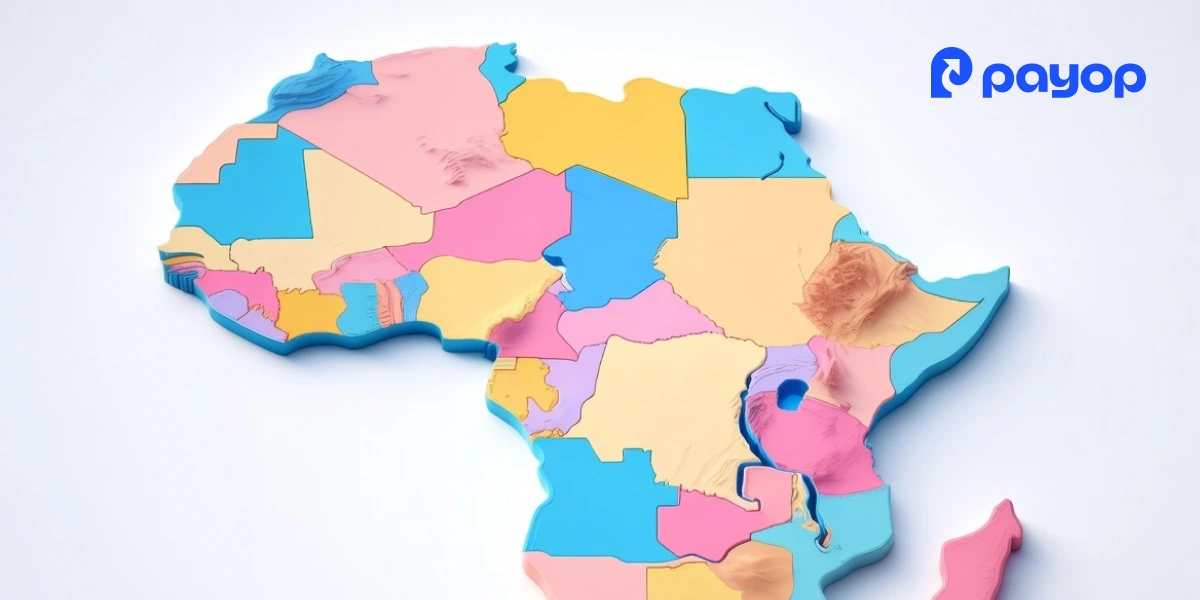
Unlike the EU`s unified PSD2 or some regional frameworks in Latin America, Africa is made up of dozens of separate regulatory environments. Each country`s central bank or financial authority sets its own rules on digital payments, e-money, and fintech.
Here are some of the main regulators:
Nigeria Central Bank of Nigeria (CBN)
South Africa South African Reserve Bank (SARB) and Financial Sector Conduct Authority (FSCA)
Kenya Central Bank of Kenya (CBK)
Ghana Bank of Ghana (BoG)
Francophone West Africa BCEAO (Central Bank of West African States)
Egypt Central Bank of Egypt (CBE)
These institutions control who can offer payment solutions financial services, what licenses are needed, how customer data is handled, and how anti-money laundering rules are enforced.
Mobile money is a massive part of Africa`s financial story. It`s what brought financial access to millions, and regulators have built specific frameworks around it, usually classifying it under Electronic Money Issuers (EMIs).
Regulated under the E-Money Guidelines (2013)
Mobile money providers must be licensed as Electronic Money Issuers (EMIs)
Customer funds must be safeguarded in segregated trust accounts
Monthly reporting and real-time transaction monitoring are mandatory
CBK has made interoperability between providers a legal requirement
Introduced a Payment Service Bank (PSB) framework to expand access in rural areas
PSBs can provide wallets, transfers, and savings accounts, but cannot offer credit or forex
Must keep 75% of customer funds in treasury instruments
Minimum capital requirement: ₦5 billion (approx. $10 million)
Nigeria also uses a tiered KYC system:
Tier 1: name and phone number (low limits)
Tier 2 & 3: government ID and address verification (higher limits)
Instruction No. 008-05-2015 governs e-money issuance
Only licensed EMIs and banks can offer mobile money services
All user funds must be stored in protected bank accounts
Daily transaction limits and balance caps apply (e.g., XOF 200,000 per day)
Providers must submit detailed financial and fraud reports to BCEAO
Learn about local payment methods and trends in Africa.
As the fintech sector grows, African regulators are adapting with new licensing regimes to cover digital services like wallets, payment gateways, and processors. Open banking-powered payment solutions are also starting to appear on the radar.
CBN categorises fintech licenses into:
Switching and Processing
Mobile Money Operators
Payment Solution Services (payment gateways, aggregators)
Super Agents
Each category has defined functions and capital requirements, ranging from ₦100 million to ₦2 billion
CBN has also launched regulatory sandboxes to support innovation under supervision
There is no single 'fintech license,' but companies must comply with:
National Payment System Act (NPSA)
Financial Sector Regulation Act (FSRA)
Payment providers often operate through partnerships with licensed banks
The Intergovernmental Fintech Working Group (IFWG) promotes policy alignment and is exploring open banking policy frameworks
Passed Law No. 5 of 2022 (Fintech Law)
Requires fintechs to register with the Central Bank of Egypt (CBE)
Imposes rules on cybersecurity, data handling, capital adequacy, and consumer protection
Offers a regulatory sandbox to test new products under controlled conditions
Transfers between African countries are often slow and expensive, particularly when using different currencies. In response to this problem, regional initiatives are emerging to simplify and localise cross-border payments.
Backed by the African Export-Import Bank (Afreximbank) and the African Union
Enables real-time cross-border payments in local currencies
Connects African central and commercial banks to eliminate reliance on foreign clearing systems
Already operational in the West African Monetary Zone (WAMZ)
The largest free trade area in the world by number of countries
Aims to standardiыe financial rules and mutually recognise licenses
Encourages collaboration on KYC norms, data protection, and fintech regulation
Still in early implementation, but presents long-term harmonisation potential
While Africa`s online payment ecosystem holds immense potential, navigating it isn`t without its difficulties. Regulatory fragmentation, infrastructure gaps, and compliance costs pose real challenges for businesses. At the same time, the continent offers unmatched opportunities for innovation, financial inclusion, and cross-border growth. Here`s a look at what companies need to consider:
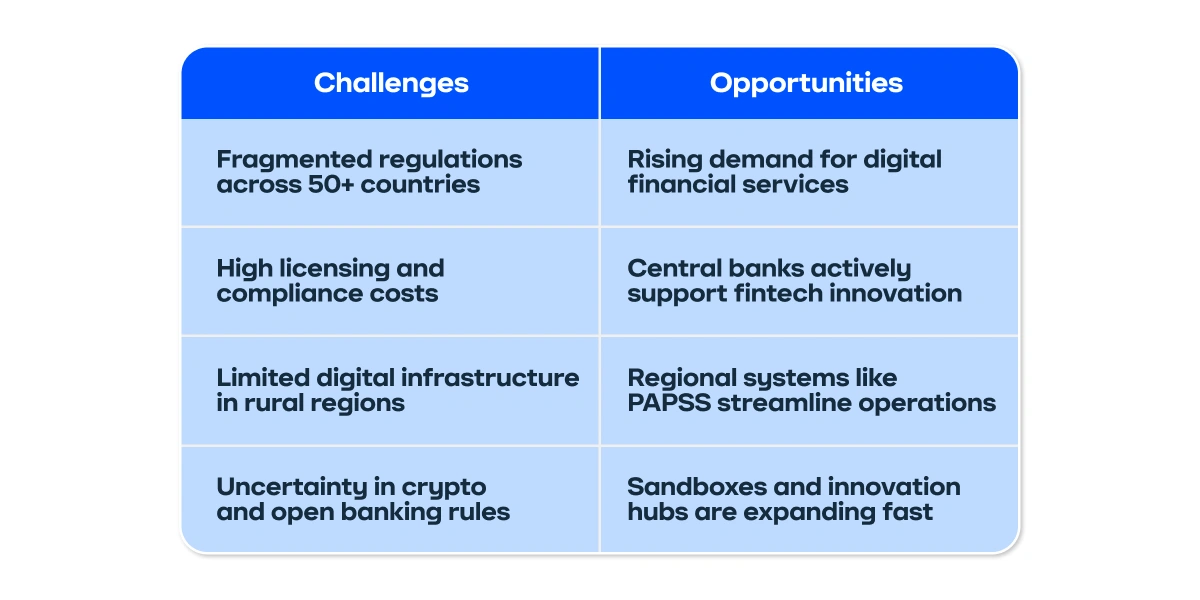
Africa`s regulatory landscape may be fragmented, but it`s also full of promise. As fintechs and mobile payment services continue to shape the future of finance, regulators are catching up with clearer, more supportive frameworks.
For businesses to succeed in the region, they need to:
Understand each country`s requirements
Build strong compliance systems
Partner with local experts or providers that can ensure regulatory alignment
By doing so, companies can tap into one of the world`s most dynamic and fast-growing digital economies responsibly and sustainably.