

Oct 19
4 MIN READ
Payop introduces a new checkout
Oct 07
4 MIN READ
Top gaming payment methods in 2026
Sep 28
4 MIN READ
Why users abandon mobile payments and how to fix it
Sep 21
4 MIN READ
The EU Instant Payments Regulation explained
Sep 11
4 MIN READ
Gamescom 2026 recap: What matters for online gaming businesses
Sep 04
4 MIN READ
The biggest business trends from Gamescom 2026
← All articles
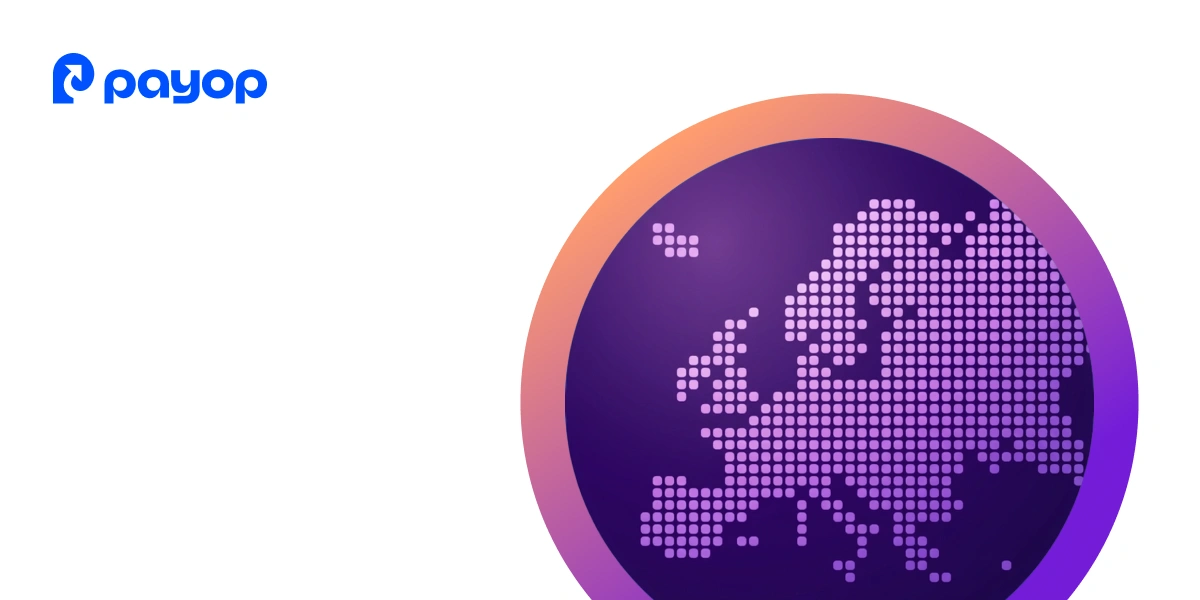
Europe’s fragmented payment market is unifying: What merchants gain
For a long time, accepting online payments across Europe was challenging. Each country had its own financial rules and preferences, meaning that the 'European market' was actually a patchwork of dozens of local payment systems. Merchants had to integrate each one separately, navigating different technical standards, regulations, and fees.
But things are finally changing. The EU is moving toward a unified payment landscape, creating new opportunities for businesses.
What is driving this change?
This shift is the result of several big moves:
SEPA: Since its full implementation in 2014, the Single Euro Payments Area (SEPA) has made cross-border online payments as cheap as local transfers.
PSD2: The PSD2 framework made third-party access to banking data possible, paving the way for open banking. This technology powers Pay by Bank solutions that allow money transfers directly from a customer’s bank account to a merchant’s.
Instant transfers (IPR & VoP): The Instant Payment Regulation (IPR), mandatory for Eurozone banks by late 2025, makes 10-second transfers the new standard. This rollout included the Verification of Payee (VoP), which automatically checks whether the recipient’s name matches their IBAN. It helps prevent misdirected payments, improving customer trust in instant bank transfers. By 2026, VoP has become a standard safety net, ensuring online transactions are as secure as they are fast.
How do merchants benefit from this?
A unified market is more than just a technical upgrade. Here’s how your business benefits from it:
Improved cross-border payment acceptance
You no longer need a separate strategy for every European country. A unified system lets you accept online payments from customers across the continent with a single setup, making business expansion much faster.
Better fraud prevention
The risk of invoice fraud and authorised push payment (APP) scams is much lower thanks to VoP. Then, the upcoming PSD3 and Payment Services Regulation (PSR) will allow banks and providers to share data more effectively, creating a collective fraud prevention mechanism across the EU. Unified rules also mean that Strong Customer Authentication (SCA) is applied consistently, reducing false declines while keeping transactions safe.
Faster authorisation and confirmation
Thanks to the IPR, funds typically move from a customer to a merchant in under 10 seconds, 365 days a year. On top of that, authorisation and settlement happen almost simultaneously. You don't have to wait days for a SEPA transfer to clear before shipping goods. Customer satisfaction and loyalty grow because they receive orders much faster, and you gain better cash flow and streamlined business operations.
Lower costs
Card networks often come with high interchange fees and hidden costs. Pay by bank methods use open banking technology, which may have lower transaction fees.
Reduced compliance and operational difficulties
Instead of integrating multiple local payment systems, you can now use a single, unified standard based on open banking. It simplifies many things: reports, technical maintenance, and compliance. Notably, the PSR established a single rulebook, meaning that you only need to follow one set of EU-wide guidelines rather than navigating the nuances of national laws.
What to expect in the future?
The goal is clear: a more independent, faster, and cheaper payment system in Europe. The future PSD3 and Payment Services Regulation (PSR) will provide this. Expected to be finalised in mid-2026, these frameworks will mandate more reliable bank APIs and stricter security. While fully applicable by 2027-2028, these rules are already changing how third-party services operate.
All these steps are unifying the European market, shifting it towards open banking. They created a solid foundation for Wero – a payment system driven by this technology. As a Pay by Bank solution, it moves funds directly between accounts in real time, without relying on card networks.
Stay ahead of online payment trends with Payop’s Pay by Bank
All recent trends indicate that Pay by Bank is evolving from an alternative to a dominant market force. Open banking technology will allow the EU payment system to become independent of Visa and Mastercard.
With Payop’s Pay by Bank, you can keep up with this shift. Our solution has:
Near-instant settlement. Because open banking doesn’t need card intermediaries, it enables near-instant payment processing, even outside banking hours in some regions.
Lower risk of chargebacks. With our Pay by Bank, customers authorise online transactions directly in their banking app using biometrics or a PIN.
Higher security. There’s no need to manually enter card details, so users' sensitive information stays off the Internet. Besides, it speeds up the checkout process.
Better conversion. Pay by Bank is secure, convenient, and fast, helping boost customer satisfaction. Open banking is well established and popular in Europe, and by offering this option, you give local users a payment method they already trust and are familiar with. This is what builds high conversion rates.
Ready to become a part of this shift? Contact us at sales@payop.com.
More similar blogs
Oct 07
4 MIN READ
Top gaming payment methods in 2026
Sep 28
4 MIN READ