
Feb 17
7 MIN READ

Expanding globally means entering markets with different customer behaviours, payment habits, and expectations. What feels convenient and familiar in one country may not work nearly as well in another.
So, what shapes payment preferences across mature and emerging markets, and how can businesses adapt their payment experience to meet them?
Read on to discover the key differences and what they mean for international businesses.
Payment preferences are shaped by many factors, from financial infrastructure and access to banking to technology and everyday habits. Since these factors vary across markets, so do the ways people prefer to pay.
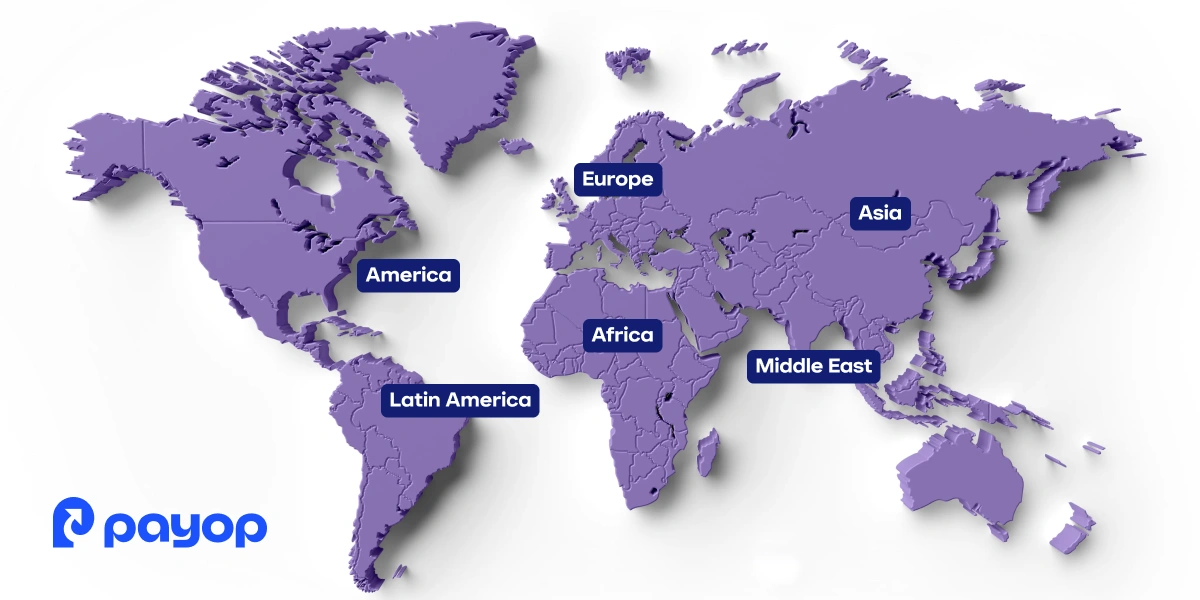
In mature markets, banking infrastructure is well established, and most consumers have easy access to bank accounts and cards. As a result, cards have long been a common choice for online payments. At the same time, digital wallets and account-to-account payments are gaining ground. Research shows that by 2030, wallets are expected to catch up with cards, becoming the second most popular option.
The picture is very different in emerging markets. Traditional banking services are less accessible, while smartphones are widely used. This has helped local payment ecosystems develop around mobile wallets, instant bank transfers, QR payments, and other alternatives to cards.
Cash also remains important in some emerging markets. Consumers use vouchers or convenience-store payments to pay for online purchases without a card.
The difference, however, is not simply cards versus alternative payment methods. People choose payment options that fit the financial infrastructure, technology, and habits of their local market. For global businesses, understanding these differences is the first step towards building a payment experience that works across regions.
The difference between mature and emerging markets lies in four key aspects:
In emerging markets, financial infrastructure is often less dependent on traditional banks. Access to banking services may be limited by documentation requirements, infrastructure gaps, or uneven internet connectivity. As a result, mobile operators, super apps, fintech platforms, and national payment systems often play a bigger role.
This environment has supported the growth of mobile money, QR payments, and instant account-to-account transfers. These methods give consumers more ways to pay without relying on cards or traditional banking services.
Mature markets, in contrast, have well-established banking infrastructure and widespread access to bank accounts and cards. Payment processing is also supported by strong regulatory and security frameworks. As a result, cards, bank transfers, and digital wallets are widely used, while instant payment options continue to grow.
Mature markets have long-established payment ecosystems in which merchants, banks, payment providers, and regulators operate within defined standards. But what makes such ecosystems mature also complicates the adoption of new technologies. Developed markets must create many new rules and regulations to integrate innovations into their complex, multi-layered structures. Look at Europe: it had to issue various directives from 2015 to 2026 to standardise open banking.
Developing markets choose a different path. Instead of trying to catch up with mature ecosystems, they focused on creating flexible solutions, best adapted to local conditions. In doing so, they skipped some steps entirely and moved straight to innovations, sometimes even leapfrogging Europe.
In many emerging markets, smartphones are the primary way consumers access the internet, making mobile commerce especially important. This has also supported the widespread adoption of mobile-first payment methods, such as MoMo in Vietnam and GoPay in Indonesia.
In mature markets, online shopping is typically more evenly split between mobile and desktop devices. This means businesses need to provide a convenient payment experience across different screen sizes and devices rather than focusing primarily on mobile.
In markets where concerns about payment fraud are great, consumers are cautious about paying online and prefer cash-based options for online purchases. This is one reason why convenience store payments remain popular in parts of Latin America, alongside factors such as cash habits and access to banking services.
In mature economies, people usually feel safe with online payment processing and trust card and digital payments more, as long as strong data protection is in place.
Secure payment processing and a seamless checkout experience are standard in mature markets. Locals expect nothing less. To accept online payments in these regions and boost conversion rates rather than losing revenue, prioritise:
Fast and effortless checkout. Keep your checkout seamless and efficient: reduce the required fields to a minimum, make the design intuitive and easy to navigate, and add saved payment details for returning customers.
Convenience. Digital wallets are gaining popularity thanks to their convenience, challenging card payments. Take it into account and add wallets like Google and Apple Pay, and PayPal for mature markets.
Security. Consumers in mature markets expect strong security to be built into the payment experience. Pay by Bank can help meet these expectations by allowing customers to authorise transactions directly through their banking app. Since there is no need to enter card details at checkout, sensitive card information is not shared with the merchant, reducing its exposure in case of a data breach.
In emerging markets, alternative payment methods dominate the digital economy. If you want to operate there, here’s what you need to include in your payment setup:
Instant account-to-account (A2A) transfers. This is one of the most popular methods, allowing immediate settlement of funds. Examples include: Pix in Brazil, UPI in India, and SPEI in Mexico.
Local wallets. Solutions like GCash in the Philippines, Mercado Pago working across LATAM, and Alipay and WeChat Pay in China let users pay directly from their smartphones.
Mobile payments. Also known as mobile money, this option allows customers to pay online using digital wallets linked to their mobile phone numbers. Popular examples are M-Pesa in Kenya and MTN MoMo in Nigeria.
Cash-based solutions. Solutions like OXXO in Mexico, Boleto Bancário in Brazil and PagoEfectivo in Peru allow users to pay for their online purchases in convenience stores or banks using a voucher or a QR code.
As convenient as creating a universal payment methods mix may sound, this approach can negatively impact your conversion rate. First, cart abandonment often happens because familiar payment methods are unavailable. Research shows that about 20% of customers drop off if they cannot pay with their preferred options.
Second, cross-border payment processing can result in higher fees and lower authorisation rates. Transactions may face additional checks or be declined when they are processed outside the customer’s local market, particularly when they appear unusual to the issuing bank. This makes localisation an important part of global expansion. The payment setup should reflect local preferences and processing conditions in each market.
Adapting the checkout experience for different regions is important, but how do you do it? Follow these five steps:
Understand the local payment landscape. From banking penetration to customer habits, popular payment methods and specific user expectations – the more information you have, the better your chances for success.
Localise the checkout. Adapt language, currency, and payment methods for each market’s preferences. Don’t forget to optimise the checkout for smartphone users.
Optimise payment performance. To quickly identify revenue leaks in your system, continuously analyse payment data, monitor approval rates, reduce declines, and optimise routing.
Stay compliant with local regulations. Know the rules for payment processing in the markets where you operate, inside and out. Ignoring them can harm your business.
Partner with the right payment service provider. Last but not least – find a reliable provider. Not just a payment gateway, but a partner that will have your back, whether you’re expanding to mature markets or emerging ones.
Meeting local payment expectations in different markets is much easier with Payop. Thanks to our wide selection of global and local payment methods, built-in security, and scalable system, you can reach a much wider customer base and maximise your profits.
Contact us at sales@payop.com to start our partnership today.