May 29
6 MIN READ




Not every payment service provider (PSP) that supports international transactions can meet the needs of a global business. Country coverage alone doesn't say much about how well a PSP can handle local payment preferences, currency conversions, or cross-border transactions.
Choosing the wrong partner can mean higher processing costs, more declined payments, and lost customers. So, what should you actually look for in a PSP before committing to a long-term partnership?
Let's review the key factors to consider.
A payment service provider is a third-party company that lets merchants accept and process global payments. It provides the full infrastructure, including secure gateways and a merchant dashboard.
Typically, a PSP covers:
Payment method integration. Providers offer various payment methods, so merchants don't have to integrate each option manually.
Transaction processing. A PSP handles payment processing by connecting the parties involved and helping transactions move from authorisation to settlement.
Fund settlement and payout. A PSP settles payments and transfers funds to the merchant’s account based on the agreed payout schedule and fees.
Reporting. PSPs often let merchants track their payment system’s performance and generate reports for different periods.
Payment security. A payment provider helps protect global payments from fraud, reducing the risk of customer data theft and chargebacks.
International payment processing is more complex than domestic because you have to deal with:
Currency conversion. Handling multiple currencies means extra FX fees, and to avoid conversion losses, you need a provider that supports multi-currency settlement.
Slower processing. Cross-border payments often pass through multiple intermediaries, which can slow processing and raise costs.
Regulatory complexity. Each country has its own rules for managing online payments, and you must follow them all to avoid costly penalties.
Lower approval rates. Because of technical issues and cross-border friction, international transactions are declined more often than domestic ones.
Different payment preferences. Customers in different countries have diverse payment habits and expect to see their preferred options at checkout. Failing to meet these expectations can harm your conversions, especially in markets that rely heavily on local solutions.
There are several key factors that help you better understand how well a specific PSP fits your needs.
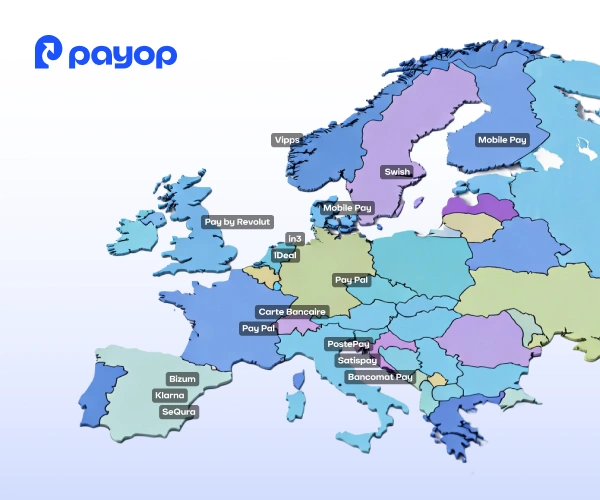
Adapting to local payment preferences is key to boosting conversion rates across markets. Cards and popular digital wallets like Google Pay or Apple Pay aren't universal. Despite their widespread adoption, local solutions dominate many countries across Asia, Africa, and Latin America.
That’s why supporting the most popular solutions in your target markets increases your sales potential.
A localised checkout is the foundation of higher customer satisfaction. Not all users will waste time translating a payment page or converting unfamiliar currency – some may decide it’s too much hassle.
Localisation also requires optimising the checkout for customers’ preferred devices. In many emerging markets, most traffic comes from smartphones, so a mobile-optimised checkout is non-negotiable there.
During payment processing, a transaction goes through several stages before it’s approved, and routing decides which path it will take. But incompatible systems, technical issues, and overly strict fraud filters can cause processors or acquiring banks to decline even a legitimate transaction.
To combat this, choose a PSP that supports smart payment routing. This mechanism makes data-driven decisions in real time and selects the path with the highest chance of approval. If the first attempt fails, smart routing immediately chooses another path without the customer noticing. As a result, you get more approved payments and happy customers.
Multi-currency processing allows businesses to accept payments in different currencies, so customers can pay in a currency they’re familiar with. This can help reduce unnecessary currency conversions and additional fees.
Multi-currency settlement lets businesses receive payments in different currencies, rather than converting all funds into a single currency. Why does this matter? If you accept €10,000 in payments but your provider only supports settlement in USD, the funds will be converted into dollars before payout, potentially adding conversion costs. With multi-currency settlement, you can receive funds in your EUR account without first converting them to USD.
Both are important for global businesses. Multi-currency processing helps prevent customer frustration from unexpected charges, while multi-currency settlement helps reduce conversion costs.
Cross-border payments are more vulnerable to fraud. To secure them, a global PSP should use anti-fraud tools powered by Artificial Intelligence (AI).
Here’s how it can help protect transactions:
Behaviour analysis. AI analyses every aspect of user behaviour, spotting suspicious patterns that traditional security systems can’t see. It helps reduce fraud risk without increasing declined global payments.
Pattern recognition across massive datasets. At checkout, AI-powered tools can evaluate 200+ patterns at once and spot even the slightest anomalies. They also learn from every transaction within a single provider’s ecosystem. For example, if a fraudster tried to pay with a stolen card at an African online store, the system remembers their digital footprint, and when the criminal tries again in Europe, AI automatically blocks the payment.
Adaptive risk scoring. AI assigns a risk score to every transaction. Low-risk payments pass, medium-risk trigger extra verification steps, and high-risk attempts are blocked. This helps secure global payments without increasing false positives.
Selling internationally requires being compliant with financial rules and regulations that apply to your business in each country. This helps avoid costly fines and maintain customer trust.
When choosing a global payment service provider, make sure it meets key security standards and complies with relevant data privacy laws. For example, PCI DSS is a global standard for card data security. Then, there are regional and national laws that regulate data privacy, such as GDPR in the EU, LGPD in Brazil, or PDPA in Singapore. Depending on your transaction volumes and target markets, you must align with each region's security requirements.
Running a global business brings many opportunities, and many challenges, too. That’s why you need a reliable and experienced partner that supports your growth, not blocks it.
Payop is a payment service provider for online businesses that accept international transactions. Partnering with us, merchants gain access to a wide range of local and global payment methods through a single integration.
We structured the onboarding process so that every step of the way is clear. It makes integrating Payop into your systems as quick and easy as possible. But if you need help, you always have access to real human support. And this communication doesn’t end after integration. A dedicated account manager stays in touch to answer questions and even help resolve disputes.
Reach out to us at sales@payop.com and go global with Payop.